
"The Origin of Finger-Printing" by William James Herschel is a recount of the groundbreaking journey of fingerprinting as a method for personal identification during the late 19th century. Herschel shares his firsthand experiences as a British official in India, detailing his initial experiments with fingerprints to combat forgery and fraud, which started when he used a local contractor's fingerprints instead of a signature. The book describes how this simple act led to the realization that fingerprints were unique and permanent, and it led to Herschel championing the use of fingerprinting as a trustworthy way to confirm someone's identity, thus transforming legal and administrative practices. The historical account also includes interactions with key individuals who played a role in establishing fingerprinting as a vital tool for law enforcement.

The Origin of Finger-Printing
By William James Herschel
An innovative method to identify individuals emerges from colonial India, forever changing how law enforcement verifies people's identities.
Genres
Released
2011-01-05
Formats
mobi
epub
mobi (images)
epub3 (images)
epub (images)
txt
Free Download
Summary
About the AuthorSir William James Herschel, 2nd Baronet was a British ICS officer in India who used fingerprints for identification on contracts.
Sir William James Herschel, 2nd Baronet was a British ICS officer in India who used fingerprints for identification on contracts.
Total Reviews
10.0k
Total reviews from Goodreads may change
More Like This
Explore books similar to the one you're viewing

The Science of Fingerprints: Classification and Uses
By United States. Federal Bureau of Investigation
The Invention of Printing. A Collection of Facts and Opinions, Descriptive of Early Prints and Playing Cards, the Block-Books of the Fifteenth Century, the Legend of Lourens Janszoon Coster, of Haarlem, and the Work of John Gutenberg and His Associates
By Theodore Low De Vinne
Early Typography
By William Skeen
Dactylography; Or, The Study of Finger-prints
By Henry Faulds
Printers' Marks: A Chapter in the History of Typography
By W. (William) Roberts
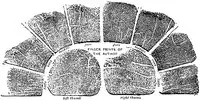
Finger Prints
By Francis Galton
The Invention of Typography A Brief Sketch of the Invention of Printing and How it Came About
By Frederick W. (Frederick William) Hamilton
More by This Author
Discover other books written by the same author

Related by Category
Discover books in the same genre or category
The Story of Elizabeth Canning Considered
By John Hill
The Power of Conscience, exemplified in the genuine and extraordinary confession of Thomas Bedworth delivered to one of the principal officers of Newgate, the night before his execution on September 18, 1815, for the murder of Elizabeth Beesmore in Drury lane. Relating his horrible sufferings until compelled to surrender to public justice by the constant supernatural visitations of the murdered woman, and the frequent appearance of her apparition. From the original paper now in the possession of the publisher. Including interesting particulars of Bedworth's former life, his behaviour before execution, and an original and full report of the Common Serjeant's address on passing sentence.
By Thomas Bedworth

Atrocious Judges : Lives of Judges Infamous as Tools of Tyrants and Instruments of Oppression
By John Campbell Campbell
The Law's Lumber Room (Second Series)
By Francis Watt

The Confessions of Artemas Quibble Being the Ingenuous and Unvarnished History of Artemas Quibble, Esquire, One-Time Practitioner in the New York Criminal Courts, Together with an Account of the Divers Wiles, Tricks, Sophistries, Technicalities, and Sundry Artifices of Himself and Others of the Fraternity, Commonly Yclept "Shysters" or "Shyster Lawyers"
By Arthur Cheney Train

Studies in Moro History, Law, and Religion
By Najeeb M. (Najeeb Mitry) Saleeby